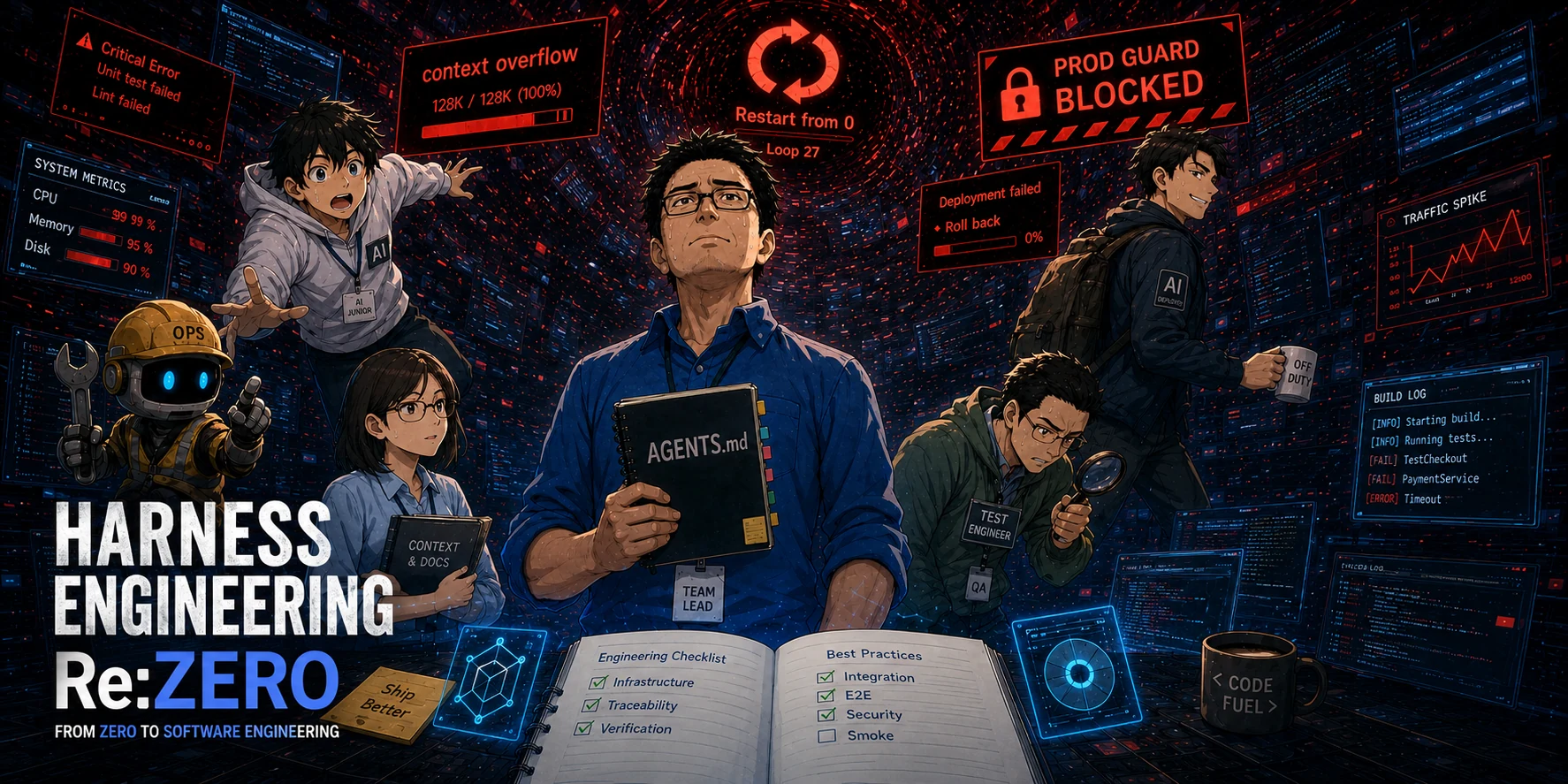
 Hi, I'm Luke, the one building the (rather ambitious) open-source project "naia." I've been working on a book — Harness Engineering: Re:Zero, Starting AI Software Engineering from Zero.
Don't expect a typical clone-coding book. The era of typing out code line by line is over; this book assumes developers who already work with Claude Code or Codex. There's real code, linked to open source so you can check and run it yourself — but I don't recommend copying it by hand.
That's because the code was made for AI to read, not for people to transcribe. What I wanted to share is this — how AI actually behaves, and therefore what a human still has to watch over, and which questions and standards to hold onto in that moment. So I share the code, but it's closer to sharing war stories; the record itself is in the book and in git.
Why "Re:Zero"
When you build with AI, something that looked finished collapses at the verification step, and you end up rebuilding the structure from scratch — over and over. Instead of resigning yourself to that loop, this book says: record why it broke, decide what to pin down, and cut the same failure next time. Even if you return to zero, don't stand on the same zero every time. That's what I mean by harness engineering — and I kept finding and fixing problems even while writing this very book. As for why the subtitle says "software engineering"? That story is in the book, so I hope you'll read it.
A dev book by an ex-webtoon PD
I worked as an AI and web-service developer at Naver, and also as a webtoon PD (producer). I leaned on that — mixing in comic panels, dev memes, and anime parodies. Rather than making you memorize dry methodology, I wanted the everyday life and funny failures of a dev team to make "what to hand to AI, and what a human must keep" actually stick.
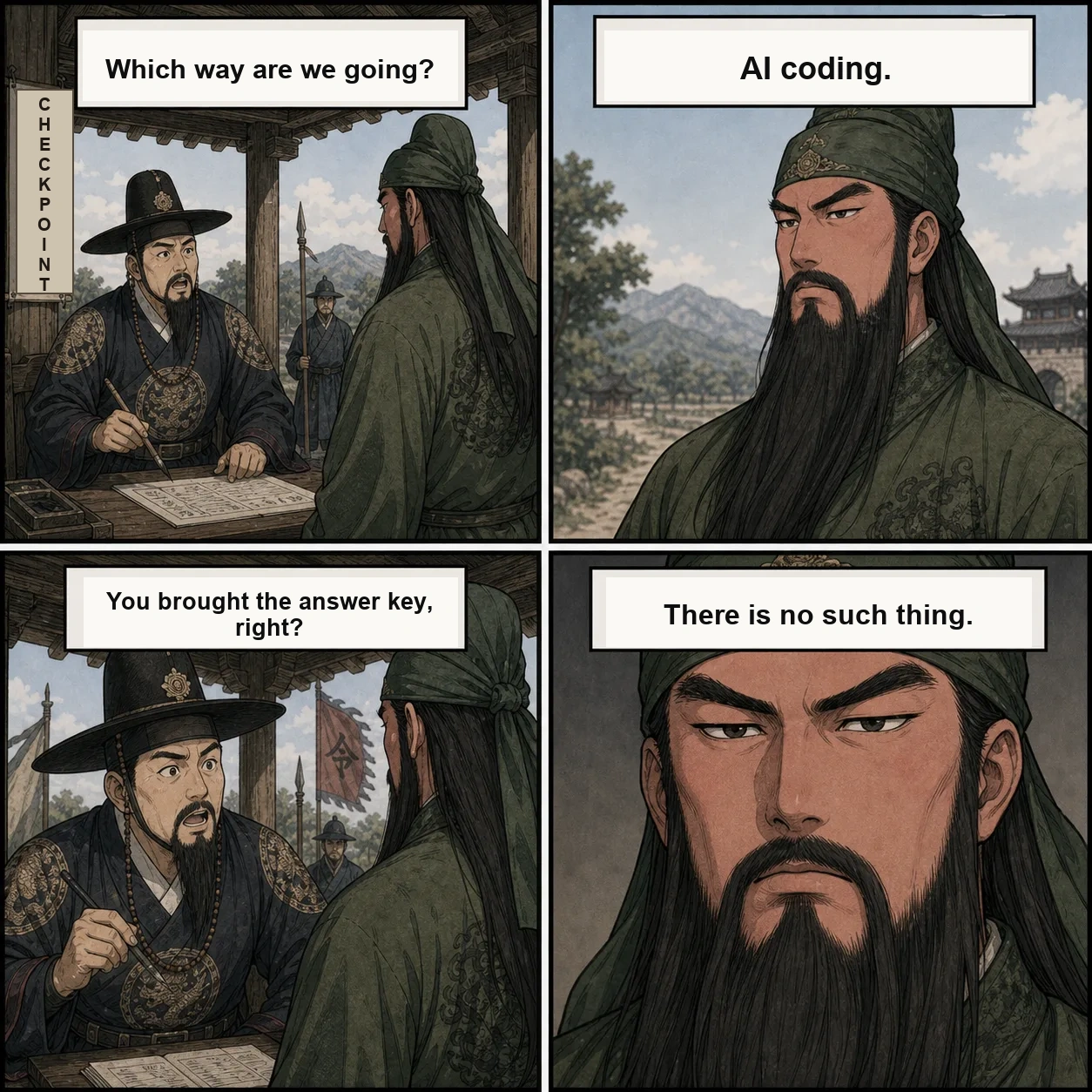
What the book is really for
naia is still only half tidied up after our open-source meetup — spread across several repositories, and in need of good docs to explain it. So as I clean and structure that code, I'm releasing it for learning and inviting people in. That's another reason this book and its code aren't one-and-done: I'll keep updating them.
And you might catch it, you might not — but from the cover all the way to Chapter 17, the illustrations hide my journey toward welcoming "Alpha" as a companion. The truth is, the reason I built naia in the first place was to build that Alpha. This book, and the journey in those pictures, is a step toward Alpha too.
Where to read it
The English edition is on Leanpub → https://leanpub.com/naia-harness. The book is open-licensed (CC BY-NC-ND 4.0), so it's yours to read and share. You're welcome to pitch in too, from typo reports to adding cases, via Issues and PRs.
If, after closing the book, you start asking AI better questions in your own projects, verifying the results, and designing a harness that cuts the repeated collapse — and if you come to treat AI not as a tool but as a colleague you work alongside — then the book did its job.
Luke (Byungseok Yang) · Nextain · www.naia.land — an AI that runs on your own machine and remembers you.
